



The presidential candidate of the Allied Peoples Movement (APM), Governor Seyi Makinde, has unveiled a new national vision tagged “Reset Nigeria,” calling for a fundamental overhaul of the systems, institutions and structures responsible for Nigeria’s recurring economic, security and social challenges.

In his 145th newsletter on September 3rd, Makinde said Nigeria’s journey towards sustainable development must go beyond the periodic change of governments and political leaders, stressing that the country must confront and reform the underlying systems that have continued to produce poverty, unemployment, insecurity, and limited opportunities for millions of Nigerians.
According to him, successive governments have introduced new policies and promised fresh beginnings, yet many Nigerians have continued to experience similar challenges.
“Too many of our people are still trapped in poverty. Too many families work hard without experiencing real progress. Too many young Nigerians are unable to see a clear path from education to opportunity,” the APM presidential candidate stated.

He noted that insecurity continues to disrupt lives and livelihoods across the country, while several institutions established to serve and protect citizens have failed to operate at the level required to meet the expectations of the people.
Makinde maintained that these realities demonstrate that Nigeria’s challenges are bigger than the individuals occupying public offices at any particular time.
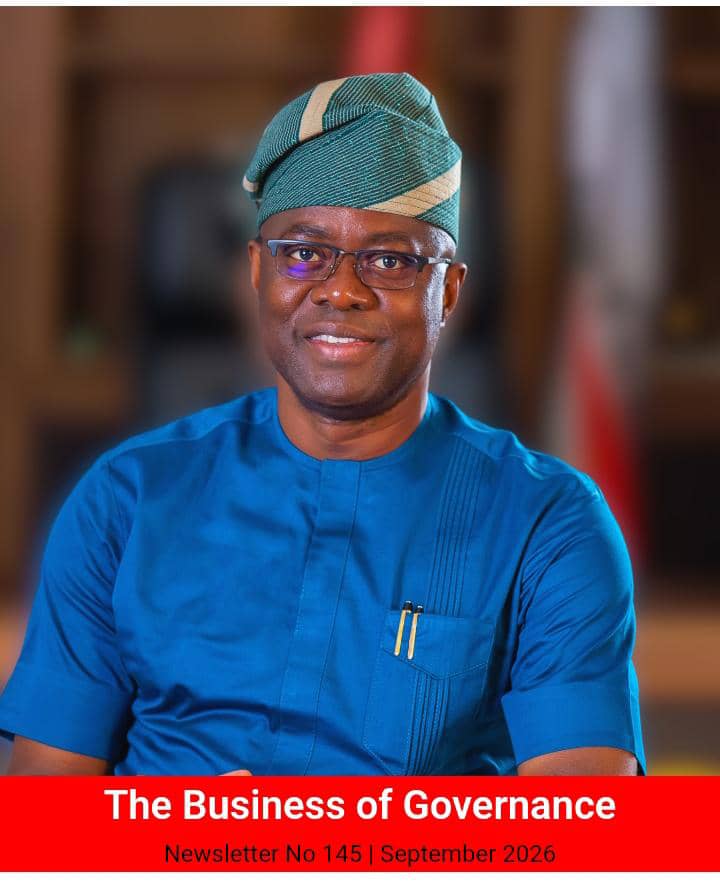
“We must address the systems, institutions and structures that continue to reproduce outcomes that do not serve the majority of our people,” he said.
As part of the Reset Nigeria conversation, Makinde identified the nation’s petroleum pricing framework as one of the critical issues requiring urgent public interrogation.
He observed that the debate over petroleum products has, for years, been largely presented as a choice between subsidising petroleum products and allowing Nigerians to pay the full market price.
However, Makinde argued that the country must begin to ask a more fundamental question: What is the right petroleum pricing framework for an oil-producing country like Nigeria?
He explained that petroleum prices are determined differently across countries and called for greater transparency in Nigeria’s pricing structure.
According to him, Nigerians deserve to understand the framework and assumptions used in determining the prices paid at the pump, including crude oil price benchmarks, refining costs and margins, exchange-rate assumptions, logistics and distribution costs, taxes, levies and other variables.
He said such information should be publicly accessible and sufficiently clear to enable Nigerians to interrogate the basis of petroleum pricing and compare the existing model with possible alternatives.
Makinde also rejected the argument that Nigerians must necessarily pay higher prices for petroleum products simply to eliminate price differences that encourage smuggling into neighbouring countries.
“Nigerians should not be made to bear the cost of government’s inability to secure its borders,” he said.
The APM presidential candidate stressed that the petroleum debate should no longer be limited to whether subsidy should return or remain removed.
Rather, he said the more important issue is whether Nigeria’s existing pricing system is appropriate for the country’s circumstances and whether it allows Nigerians to derive fair benefits from the natural resources they collectively own.
Makinde disclosed that the Reset Nigeria agenda would, in the coming weeks, present alternative ideas and policy proposals for Nigerians to examine and assess.
He described Reset Nigeria as a national movement aimed at rebuilding the country’s systems and institutions to ensure that Nigeria works for every Nigerian, irrespective of social status, geographical location or political affiliation.
Makinde said meaningful national renewal would require both accountable leadership and active citizenship.
According to him, a national reset demands that those entrusted with the responsibility of governance must serve differently, while citizens must also participate actively and responsibly in the process of rebuilding the country.
He emphasised that transforming Nigeria would neither be an instant process nor the responsibility of one individual.
Instead, he said the process must be deliberate and sustained, supported by a clear national roadmap, measurable priorities and the continued participation of Nigerians at home and abroad.
Makinde said he would continue to share his vision for resetting critical sectors of the country, including the economy, security architecture, education system, public institutions, as well as Nigeria’s social and political order.
He also promised to share lessons from his years in public service and how those experiences have contributed to shaping his vision for a new Nigeria.
Most importantly, the APM presidential candidate called on Nigerians to become active participants in the conversation and contribute their ideas towards defining the nation’s priorities.
“If Nigeria is to work for every Nigerian, what do you believe we must reset first?” he asked.
With the unveiling of the Reset Nigeria agenda, Makinde has opened what promises to become a broader national conversation on the future of the country one centred not merely on changing governments, but on rebuilding the systems that determine how government works and how Nigerians experience the nation.
The message behind the movement is clear: Nigeria’s future requires accountable leadership, functional institutions, active citizenship and the courage to rethink the systems that have failed to deliver for generations.
Reset Nigeria. Rebuild the Systems. Make Nigeria Work for Every Nigerian.