





Nigeria Must Protect Multiparty Democracy, Political Freedom and the Principles of Democratic Competition.

There is no genuine democracy without a viable opposition. A democratic society cannot be sustained merely by conducting elections; it must also guarantee political freedom, institutional independence, equal political opportunities and the right of citizens to organise themselves under different political platforms.
Democracy is not the exclusive property of the ruling party. It belongs to the people, and its strength is measured not only by the performance of those in government but also by the freedom available to those who disagree with the government.
The recent developments in Nigeria’s political landscape have continued to raise serious concerns about the future of our multiparty democratic system. The increasing fragmentation of opposition parties, waves of political defections, internal party disputes, and the struggle for political relevance have created an atmosphere that deserves serious national attention.
While political defections are not necessarily undemocratic, and every Nigerian has the constitutional right to change political affiliation, the circumstances surrounding political movements, institutional pressures and the apparent weakening of opposition structures must be examined critically.
Nigeria must not gradually become a political environment where the ruling party enjoys overwhelming dominance while opposition parties struggle to maintain their independence, organisational strength and capacity to compete.

A democracy without meaningful competition risks becoming a democracy in name rather than in substance.
- The Constitutional Foundation of Political Freedom
The 1999 Constitution of the Federal Republic of Nigeria, as amended, provides a strong foundation for political association and democratic participation.
Section 40 guarantees every citizen the right to assemble freely and associate with other persons, including the right to form or belong to a political party.
Furthermore, Sections 221–224 establish important constitutional provisions governing political parties, their organisation, democratic internal structures and objectives.
These provisions demonstrate that Nigeria’s constitutional arrangement recognises political pluralism as an essential part of democratic governance.
The implication is straightforward: political parties must be allowed to exist, organise, criticise government policies, mobilise citizens and compete for political power within the law.
The ruling party has no constitutional ownership of Nigeria’s political space. Equally, the opposition has no right to undermine democratic institutions simply because it seeks power.
The Constitution must remain supreme over individual political ambitions.
2. The NADECO Struggle and the Responsibility of Democratic Leadership
One of the most important chapters in Nigeria’s democratic history was the struggle against military dictatorship following the annulment of the June 12, 1993 presidential election.
The National Democratic Coalition (NADECO), established in May 1994, became an important platform for the restoration of democratic governance and the recognition of the June 12 mandate associated with Chief Moshood Kashimawo Olawale Abiola.
The struggle was about more than the ambition of individual politicians. It represented a broader demand for constitutional government, political freedom, respect for electoral mandates and an end to military interference in democratic institutions.
President Bola Ahmed Tinubu was among the prominent political figures associated with the pro-democracy struggle. His involvement in the NADECO movement and subsequent years in exile formed part of his political history.
This history makes the present political atmosphere particularly important.
A political leader who participated in a struggle for democratic freedom should understand why political pluralism, freedom of association and the protection of opposition voices must remain non-negotiable.
My question to President Bola Ahmed Tinubu is this:
If the democratic principles that inspired the NADECO struggle were worth defending against military dictatorship, why should those same principles become less important when the opposition challenges an elected government?
The historical significance of NADECO should not be reduced to a political credential. Its democratic ideals should continue to guide those who benefited from Nigeria’s return to civilian rule.
I also call on surviving NADECO leaders, democratic activists, civil society organisations and historians to speak more actively on the importance of protecting Nigeria’s democratic institutions.
The struggle for democracy should never become a historical achievement that subsequent generations are expected to celebrate without preserving its principles.
3. The PDP Crisis and the Weakening of Opposition Politics
The crisis within the Peoples Democratic Party (PDP) is one of the most significant developments affecting Nigeria’s opposition politics.
For many years, the PDP remained the dominant political platform in Nigeria. However, internal disagreements, leadership disputes, factionalisation, defections and disagreements over political direction have considerably weakened its organisational capacity.
A PREMIUM TIMES analysis published in January 2026 reported that the PDP entered 2025 with 11 governors but lost six governors to defections during that year, leaving it with five at the end of 2025. The party’s representation in the Senate also declined from 36 members at the inauguration of the 10th National Assembly in June 2023 to 23 by the end of 2025.
These developments demonstrate the scale of the challenges confronting the party.
However, intellectual honesty requires us to recognise that the PDP’s crisis cannot automatically be attributed to the ruling APC alone. Internal leadership failures, unresolved political disagreements, weak conflict-resolution mechanisms and the ambitions of individual politicians have also contributed to the situation.
Nevertheless, the consequences extend beyond the PDP.
When a major opposition party becomes significantly weakened, the consequences affect the entire political system. It reduces the range of organised political alternatives available to voters and can diminish the capacity of the legislature and other democratic institutions to provide effective political scrutiny.
Nigeria needs strong political parties, not necessarily strong personalities gathered around political ambitions.
4. The Political Significance of Governor Seyi Makinde and the APM Platform
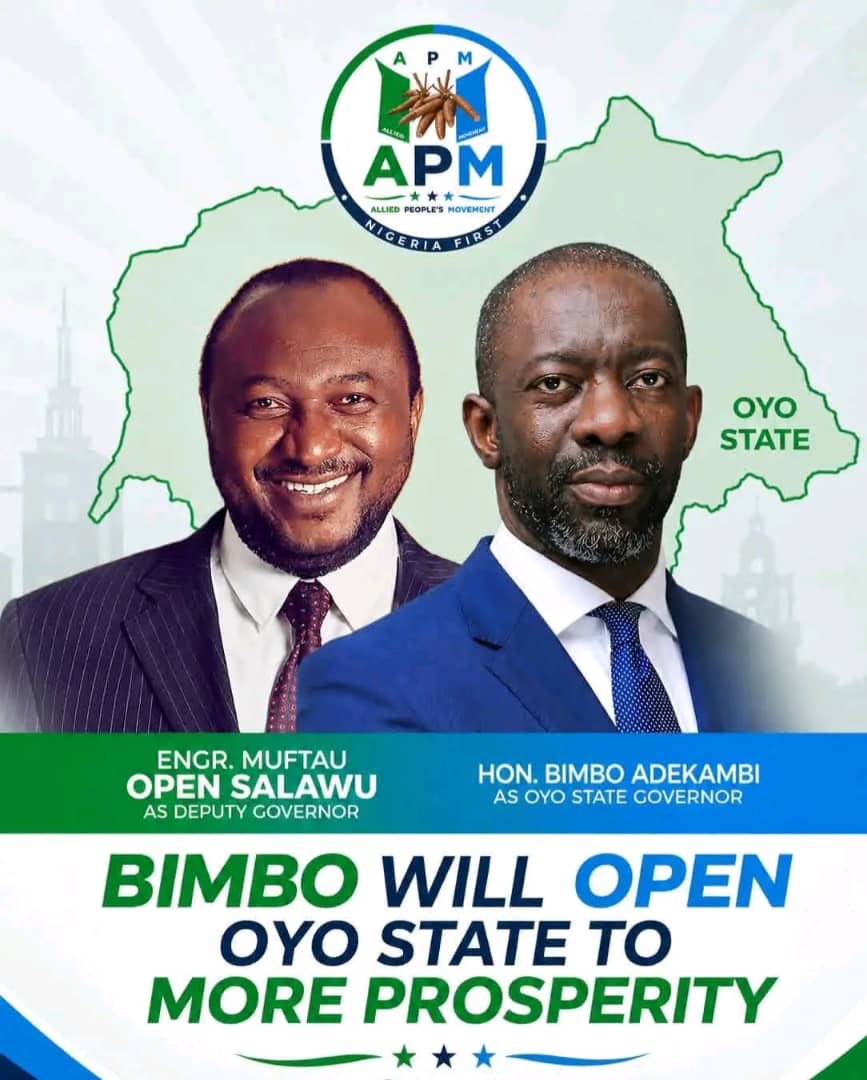
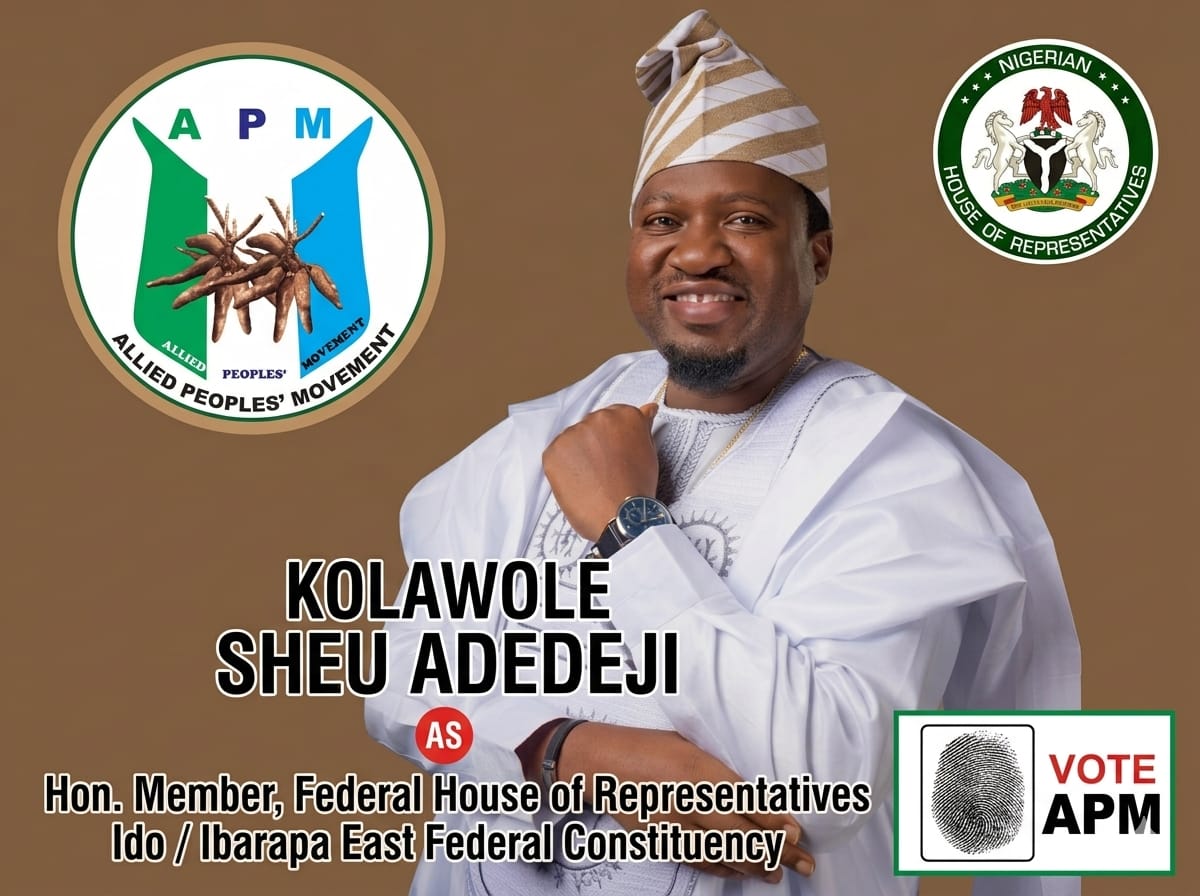
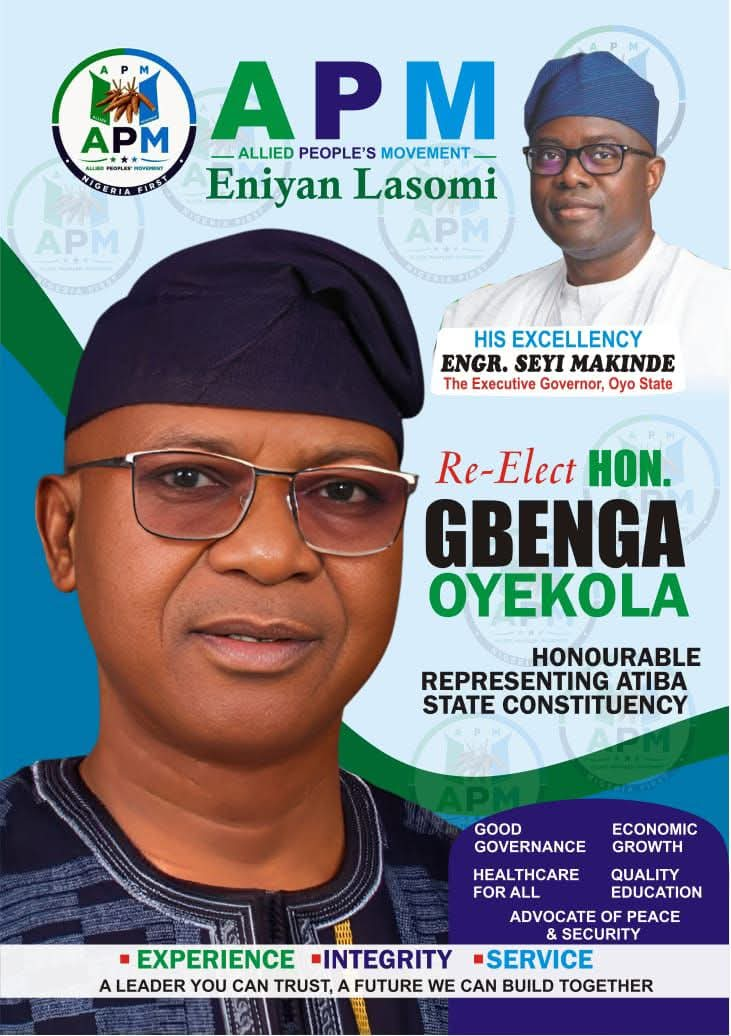
I particularly appreciate the willingness of Oyo State Governor, Engr. Seyi Makinde, to maintain a political alternative and participate in the emerging opposition discussions through the Allied Peoples Movement (APM).
His political positioning is significant because it demonstrates that political competition should not be limited to the survival or collapse of one particular political party.
The PDP’s internal challenges should not mean the end of political alternatives for Nigerians.
As reported by PREMIUM TIMES on November 16, 2026, Makinde has confirmed consultations with former Vice President Atiku Abubakar and Peter Obi concerning possible opposition cooperation ahead of the 2027 general elections. The publication also identified him as the APM presidential candidate.
This development deserves attention because democratic competition should be based on ideas, manifestos, governance records, leadership capacity and the confidence of the electorate.
I believe that the willingness of political leaders to explore alternative platforms and engage in democratic cooperation is important for the survival of multiparty politics.
However, the opposition must also demonstrate that it is capable of offering Nigerians a credible alternative. It must move beyond political negotiations and personalities to present practical solutions to unemployment, inflation, insecurity, poverty, educational challenges, industrial development and economic diversification.
The responsibility of building a viable opposition does not rest exclusively on the ruling party. Opposition leaders must also earn the confidence of the Nigerian people.
5. The Danger of a Dominant-Party Political System
Political science provides useful explanations for the dangers of excessive concentration of political power.
In a competitive multiparty democracy, political parties provide alternative policy directions, represent different interests, scrutinise government decisions and offer voters the opportunity to change their leaders through elections.
Political competition also creates incentives for governments to respond to public demands because electoral defeat remains a possibility.
Where political competition becomes weak, the incentives for accountability can decline.
This does not mean that every dominant political party is automatically undemocratic. A party may legitimately become dominant because voters repeatedly support its programmes and candidates.
The critical distinction is between electoral dominance earned through free and fair competition and political dominance sustained by weakening the conditions necessary for genuine competition.
Nigeria must never confuse the two.
The objective should not be to prevent the APC from winning elections. The objective should be to ensure that every political party has a fair opportunity to contest elections, present its programmes and seek the mandate of Nigerians.
A ruling party that is confident in its achievements should not fear a strong opposition. Rather, it should welcome constructive criticism as an opportunity to improve governance.
6. What President Tinubu and the APC Must Understand
President Bola Ahmed Tinubu and the leadership of the APC must recognise that the strength of Nigerian democracy should be more important than the expansion of their party’s political influence.
The success of an administration should not be measured by the number of opposition politicians who defect into the ruling party.
It should be measured by economic progress, improved living conditions, security, employment opportunities, institutional development and the confidence of citizens in democratic governance.
Political leaders must resist every tendency that could create the perception that access to political participation, public institutions or democratic opportunities depends on belonging to the ruling party.
Government institutions must remain neutral, independent and committed to the Constitution.
The Independent National Electoral Commission, the judiciary, security institutions and other relevant public bodies must operate according to the law without political interference.
Where allegations of intimidation, coercion, selective enforcement or the misuse of public institutions arise, they should be investigated transparently and addressed through established legal procedures.
Political disagreement must never be treated as an offence against the state.
7. A Call to Opposition Leaders: Build Institutions, Not Just Alliances
While holding the ruling party accountable, opposition leaders must also examine their own responsibilities.
Nigeria does not need an opposition whose only political objective is to remove the incumbent government.
We need an opposition with credible economic policies, internal democracy, transparent leadership, ideological consistency and a clear national development agenda.
The opposition must develop institutional mechanisms for resolving disputes rather than allowing personal disagreements to destroy political platforms.
It must also understand that political alliances are not substitutes for public confidence.
If opposition leaders want Nigerians to trust them with national leadership, they must first demonstrate the ability to manage their own political institutions responsibly.
The 2027 general elections should be an opportunity for Nigerians to evaluate competing ideas and choose the direction they believe is best for the country.
8. My Position as a Nigerian Youth and Student Leader
As a youth mobiliser, student leader and concerned Nigerian, I have spent considerable time reflecting on the direction of our democracy.
My concern is not about which political party controls the Presidency. My concern is about the future of political freedom, democratic participation and the institutional foundations of our country.
I believe Nigerians should be free to belong to the APC, PDP, APM, ADC, LP, SDP or any other legally recognised political party without intimidation, discrimination or unnecessary political hostility.
A Nigerian should not be treated as an enemy of the state because of political affiliation.
We must create a country where young people can participate in politics without being compelled to follow the political interests of those in government.
Our democracy must provide room for disagreement, constructive criticism and alternative leadership.
We cannot continue to celebrate the sacrifices of our democratic heroes while neglecting the responsibilities that come with sustaining the democracy they fought for.
9. My Recommendations for Protecting Nigerian Democracy
I respectfully make the following recommendations:
Respect constitutional political freedom: Every Nigerian must enjoy the right to associate with and participate in any legally recognised political party.
Protect opposition parties: Government institutions must not be used to intimidate, suppress or unfairly disadvantage political opponents.
Strengthen INEC’s independence: Electoral administration must remain impartial, transparent and credible.
Promote internal party democracy: Political parties must resolve leadership disputes through their constitutions, democratic processes and the rule of law.
Protect judicial independence: Political disputes must be resolved through impartial judicial processes without political influence.
Encourage constructive opposition: Opposition parties must develop credible alternatives and hold governments accountable through lawful democratic engagement.
Promote political tolerance among Nigerian youths: Political differences must not become reasons for hatred, discrimination or violence.
Ensure equal opportunities for political participation: No citizen should enjoy an unfair political advantage simply because of access to public power or government resources.
Conclusion: Democracy Must Be Bigger Than Political Ambition
President Bola Ahmed Tinubu, the APC leadership, opposition political leaders, surviving NADECO activists, civil society organisations and the Nigerian electorate must understand that democracy is a collective national responsibility.
Nigeria did not struggle to return to civilian rule so that political power could become the exclusive preserve of one political organisation.
The essence of democracy is the freedom to choose, the freedom to disagree, the freedom to associate and the opportunity to change leadership through credible elections.
I believe Chief Obafemi Awolowo’s political legacy should also remind us of the importance of ideological politics, organised political alternatives and intellectual competition in national development.
Let the APC compete. Let the PDP rebuild. Let the APM grow. Let the ADC, SDP and other political parties organise themselves. Let every political platform present its vision to Nigerians.
Ultimately, the Nigerian people must decide through credible elections.
A strong ruling party does not need a weak opposition to prove its strength. A successful democracy needs strong institutions, credible alternatives and leaders who respect the right of others to challenge them.
I am not advocating for the defeat of any political party through unconstitutional means. I am advocating for a Nigeria where no political party is too powerful to be questioned and no opposition party is too weak to exercise its constitutional rights.
Our democracy must survive beyond President Tinubu, beyond the APC, beyond the PDP and beyond every individual politician.
Nigeria belongs to all of us. Democracy must remain the property of the Nigerian people, not the political possession of those who temporarily occupy public office.
Signed,
Comrade Olalere Benedict Adetunji
Youth Mobiliser ,Student Leader , Advocate of Democratic Governance.
07061830662.