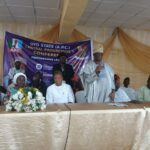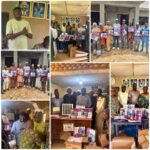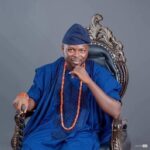




There was a time, not too distant, when the mere mention of NURTW or transport union operatives in Oyo State evoked images of raw power, street intimidation, community disruption, and the ever-present shadow of violence. These were men widely regarded as thugs, disturbers of the public peace, agents of trouble and, too often, of death. Then motor parks were theatres of factional warfare; the streets bore the scars. That was the inherited narratives of those years.
That narrative is being rewritten. The same demographic once written off is now deliberately investing in the future of its children, sending them to some of the finest universities across the globe. Education has become the new badge of status union guyz want to add to family name. And nowhere is this shift more illustrated than in the story of Olalekan Omolewa.
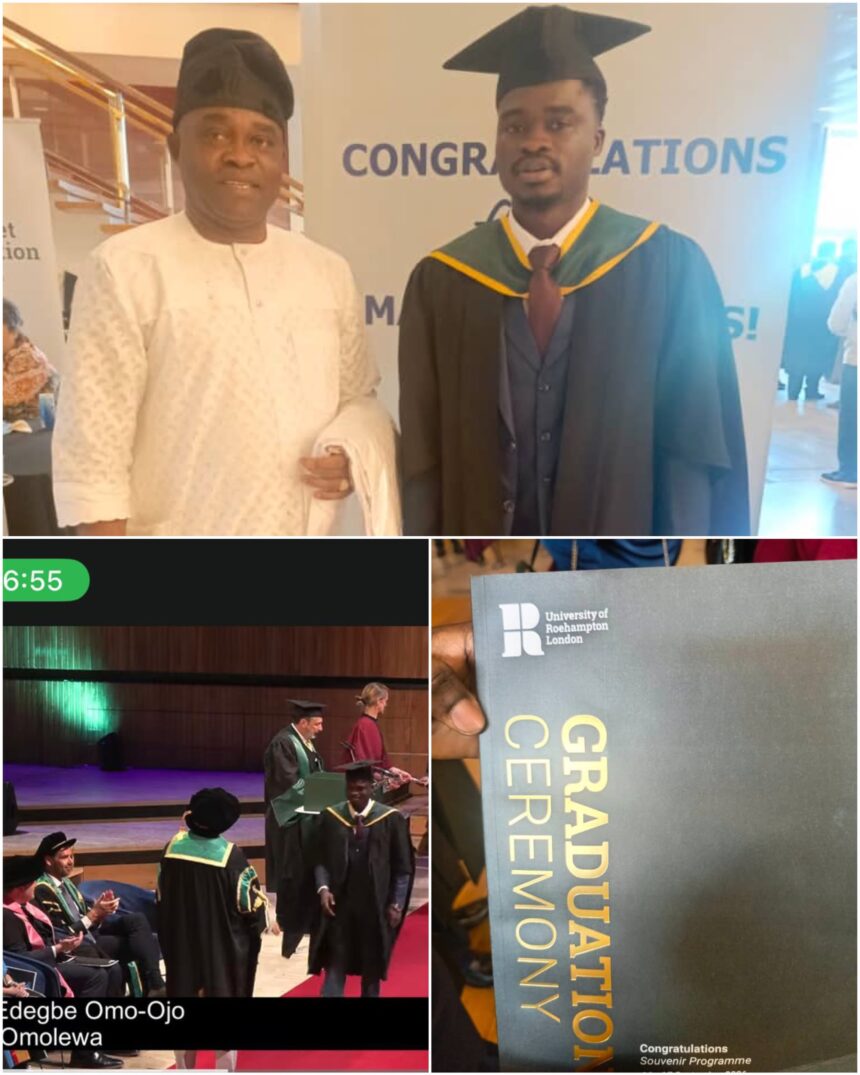
Olalekan is the son of Alhaji Tomiwa Omolewa, popularly known as Tommy, the current Chairman of the Oyo State Park Management System (PMS). He has just bagged a Master’s degree in Global Business Management from the University of Roehampton in London. This is no ordinary achievement. It is a quiet but powerful statement: the son of a transport union man, raised in the crucible of the parks, has crossed continents to acquire knowledge that equips him for a world far removed from the old stereotypes.
This transformation did not happen by accident. It is the direct fruit of deliberate policy choices. When Engineer Seyi Makinde assumed office, he moved swiftly to dismantle the culture of violence that had long defined the transport sector. The proscription of the old NURTW structure and the establishment of the Park Management System was not merely an administrative reorganisation; it was a calculated intervention to restore order, professionalise park operations, and create an environment in which transport workers could pursue legitimate livelihoods without the constant threat of bloodshed.
By replacing chaotic, faction-ridden union politics with a more structured PMS framework, the Makinde administration removed the incentives for violence and opened space for dignity. Today, stability has fully returned to our parks. Resources that once fuelled conflicts are now being redirected towards good social standing and advancements. People like Alhaji Tomiwa Omolewa could focus on consolidating peace and, more importantly, on ensuring that the next generation would not inherit the same limited horizons.

The result is visible. Transport workers who were once seen only through the lens of thuggery are now parents of graduates from reputable international institutions. Olalekan Omolewa’s Master’s degree is emblematic of this broader shift. It demonstrates that when government provides an enabling environment of relative peace and predictability, ordinary citizens, even those previously marginalised by societal prejudice, can aspire higher and achieve more.
It’s time to tell the story! Governor Seyi Makinde’s intervention in the transport sector has done more than manage parks. It has altered the social trajectory of an entire occupational group. What was once a pathway to notoriety is gradually becoming a platform for intergenerational mobility. The story of Olalekan Omolewa is not an isolated success; it is evidence that thoughtful policy can rewrite destinies.
In the end, the true measure of governance is not merely the absence of chaos, but the presence of opportunity. In Oyo State today, that opportunity is now being seized by the sons and daughters of those who once manned the parks. The old stereotypes are fading. A new chapter has begun.