

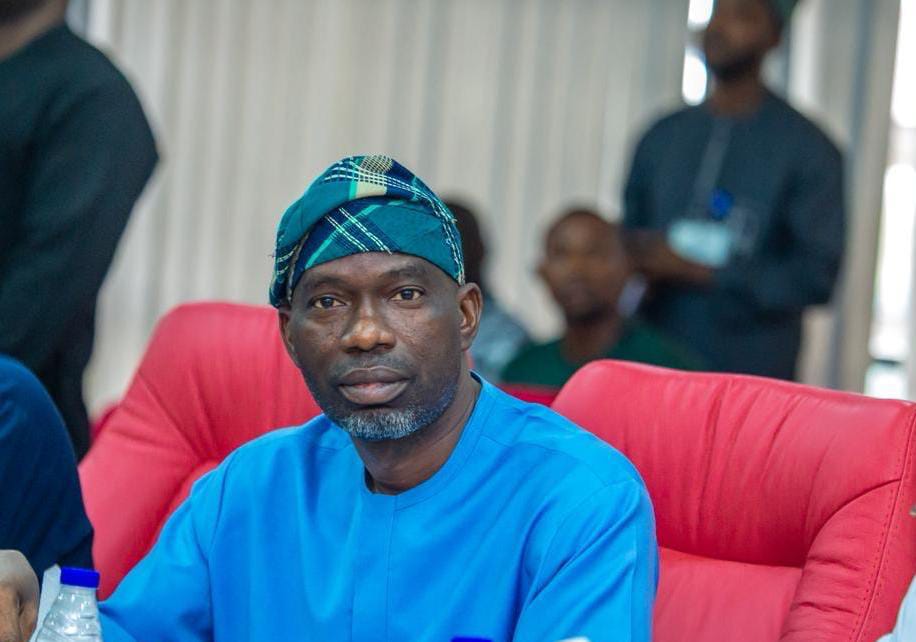
For several years, precisely from 2019 up to the present moment, the lawmaker representing Ibadan North East/South East federal constituency of Oyo State, Rep. Abass Adigun Agboworin, has remained in the public eye not because of controversy or political theatrics, but because of consistent engagement with the everyday needs of his constituents.

Indubitably, in public life, greatness is often measured by grand speeches and headline projects. Yet, for many citizens, true leadership is revealed in the little things—the classroom repaired before the rains, the borehole that saves women hours of daily struggle, the intervention that comes quietly but changes a family’s story. It is within this space of practical, human-centred governance that Hon. Abass Adigun Agboworin has built his reputation and sustained relevance not only in his constituency but also in the State.
From what has been practically investigated, Agboworin’s approach to representation recognises that development is cumulative. Small interventions, when thoughtfully delivered and evenly spread, create dignity, restore trust, and strengthen the social fabric of communities.

Across his constituency, these “little things” are visible and tangible. From the renovation of dilapidated classrooms and provision of desks to pupils, to the installation of boreholes and small water schemes in underserved areas, Agboworin’s projects reflect an understanding of what truly improves daily life. Solar streetlights that enhance security at night, modest health support initiatives, learning materials for students, and tools for artisans may not always dominate national headlines, but they speak directly to the realities of the people.



Equally important is his focus on empowerment over dependency. Skills-acquisition support, assistance for petty traders, educational support for students, and relief materials for vulnerable households have formed a quiet but steady pattern of intervention. These efforts demonstrate a belief that governance should not only provide relief, but also enable citizens to stand stronger on their own.
Beyond physical projects, Agboworin’s presence itself has been a form of service. His accessibility to constituents, responsiveness to local concerns, and willingness to intervene in community matters have helped bridge the often-wide gap between elected officials and the people they represent.

In a political culture where many disappear after elections, his continued engagement has become a reassuring constant. It is believed that he has been able to fulfill his electoral promises to the people and has said, at different fora, that he would reach out to the untouched locations before his tenure ends.
As we continue to debate the quality and character of leadership in political circle, the story of Rep. Agboworin offers a compelling lesson: ‘lasting impact is not always loud’. Sometimes, it is found in the repaired roof, the flowing tap, the lit street, and the empowered youth. These are the little things that restore hope—and they are the things that keep Agboworin firmly in public consciousness.
