




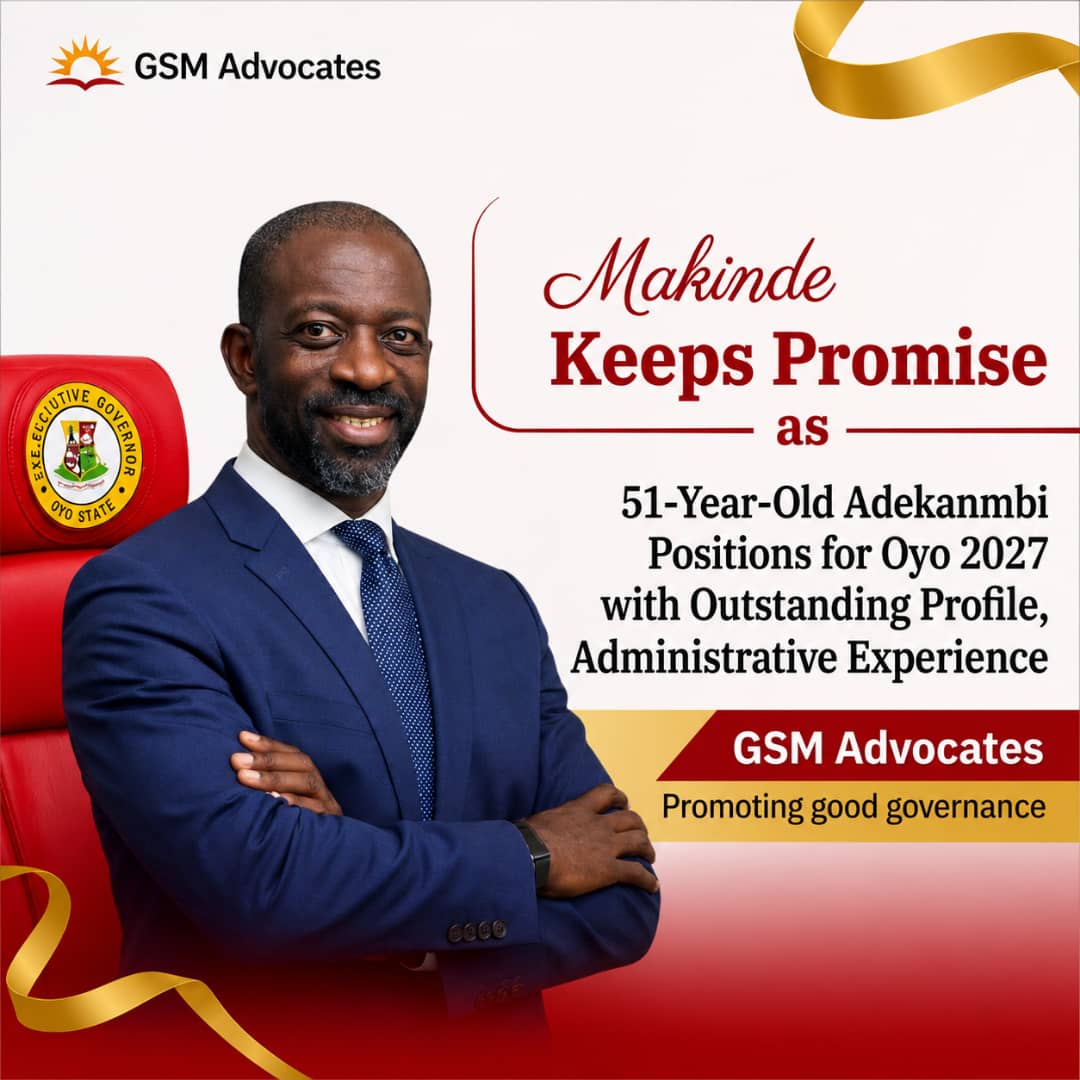

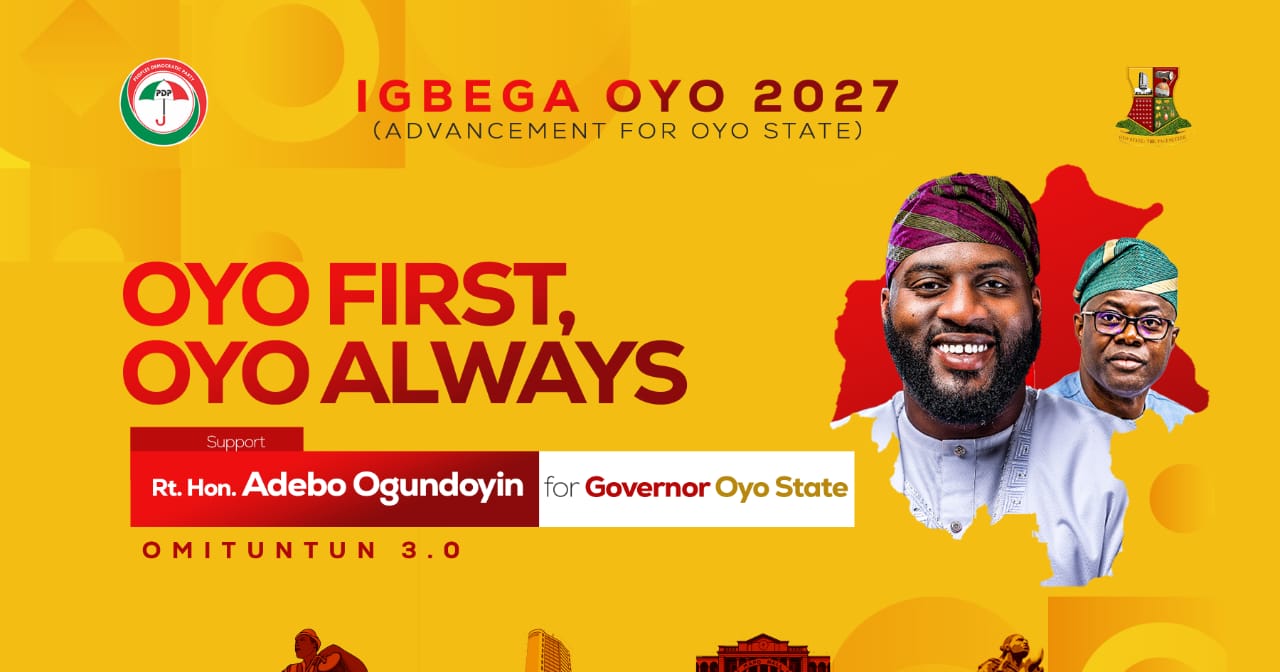
Bimbo Adekanmbi, 51, has become one of the most prominent names in Oyo State’s political and economic circles as the state’s succession politics intensify heading into 2026.
Born on October 13, 1974, in Oyo State, Adekanmbi has built a career spanning politics, economics, finance, and public administration. Over the years, he has earned recognition as one of southwestern Nigeria’s most capable technocrats, with his work closely linked to policy and governance debates in the state.

His profile has risen steadily in recent years, placing him at the center of conversations around Oyo’s political future.

Bimbo Adekanmbi’s career is defined by the intersection of academic expertise in economics and practical experience in financial management. He has worked across both private and public sectors, building a multidisciplinary profile that combines technical competence in policy with experience in organizational and electoral processes.


Colleagues characterize him as calm, strategic, and analytical, with an approach to governance grounded in discipline and evidence-based decision-making.

His reputation has developed steadily through demonstrated competence and institutional trust rather than through high-profile political visibility. Bimbo Adekanmbi’s most prominent public service role came under the late Governor Abiola Ajimobi, when he served as Oyo State’s Commissioner for Finance. The appointment placed him at the center of one of the most demanding tasks in state governance: managing the fiscal framework of a large and politically complex state.
During his tenure, Adekanmbi oversaw budget management, revenue generation, and the day-to-day administrative challenges of running a sub-national economy. The experience has since become a central part of his political narrative as he positions himself for higher office.
After leaving the Ajimobi administration, Adekanmbi continued to build his profile through engagements in both the private and public sectors. His return to formal political relevance came under Governor Seyi Makinde. On July 30, 2024, Makinde appointed him chairman of the committee overseeing the Samuel Ladoke Akintola International Airport, infrastructure project, a high-profile assignment that further raised his public profile.
The appointment placed Adekanmbi back at the center of Oyo State’s institutional life and, to many political observers, served as an early signal of the governor’s confidence in him.
Before aligning fully with the Peoples Democratic Party, Adekanmbi had contested the Oyo South Senatorial seat under the All Progressives Congress in 2023. Although the bid was unsuccessful, it underscored his appetite for elective office and his ability to navigate the demands of competitive politics.
The momentum around Bimbo Adekanmbi’s bid for the Oyo State governorship in 2027 crystallised between April and May 2026, following months of quiet consultations within political circles.
On April 21, 2026, Adekanmbi formally declared his intention to contest during a visit to the Peoples Democratic Party secretariat at Oke-Ado, Ibadan. At the meeting, he engaged with state and local government party executives alongside other key stakeholders, confirming a move that had been widely anticipated.
The declaration effectively placed him at the centre of the succession conversation in the state. Following his declaration, Bimbo Adekanmbi embarked on a methodical round of consultations across Oyo State’s political structure, signalling a campaign run with deliberate organisation.
Adekanmbi appeared before the Peoples Democratic Party advisory council led by Bolaji Ayorinde, the body inaugurated by Governor Seyi Makinde in March to engage gubernatorial aspirants. He also met with an elders’ council, where discussions centred on securing endorsement ahead of a formal public announcement.
The scope of the consultations was widely seen as evidence that his candidacy was being taken seriously at every level of the state’s political establishment.
Bimbo Adekanmbi’s trajectory from Commissioner for Finance under a former governor to the preferred governorship candidate of the incumbent reflects a steady, institution-driven rise built on professional credibility rather than political noise.


