


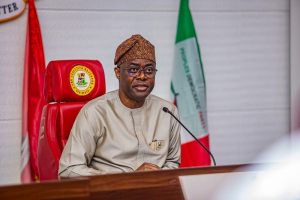




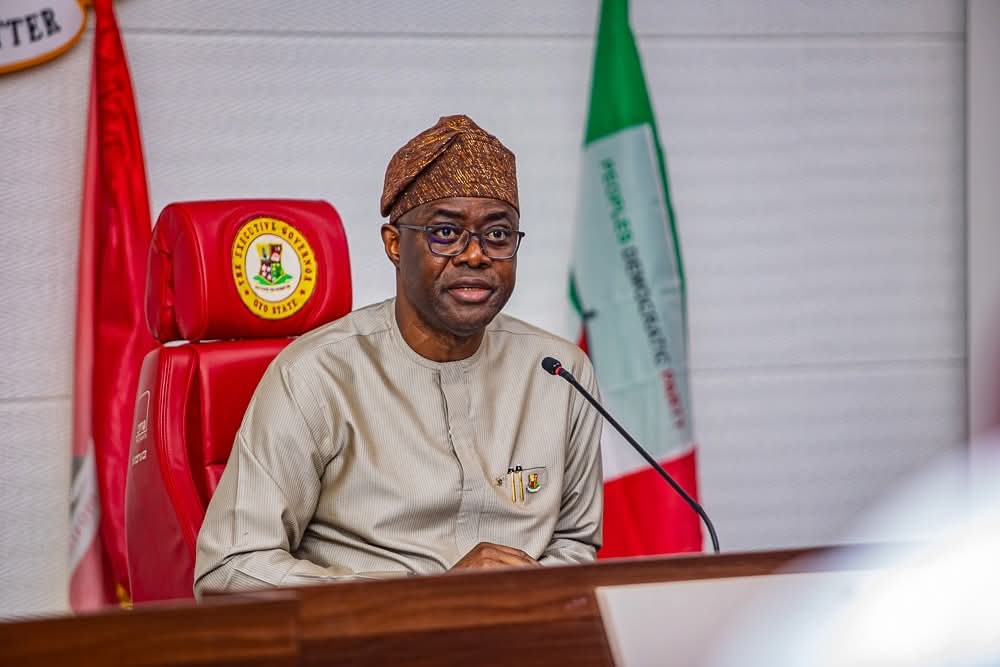
In the theatre of public life, the voice of leadership is often drowned by the noises of contention. Governor Seyi Makinde of Oyo State has inhabited that stage with a clarity of purpose that has attracted both praise and protest, steady support and sharp criticism. That duality is not unique to him; it is the lot of modern Governors everywhere.
What distinguishes constructive debate from mere din, however, is the willingness to measure leadership by outcomes, and to interrogate criticism with facts, context and an appreciation for the complexity of governing a diverse, rapidly changing polity.

Makinde’s tenure has been defined by a pragmatic, technocratic bent. He came into office promising to address the basics that matter most to citizens: functional roads and bridges, better schools and hospitals, responsive public service and an enabling environment for businesses and agriculture. Across several sectors, his administration. has initiated visible projects and reforms, not as grand rhetorical flourishes, but as practical interventions intended to raise living standards.

Investments in infrastructure, in particular, have reshaped transportation and economic corridors within the state. Equally important, there has been a steady attention to institutional reforms aimed at improving service delivery and fiscal management.


To those who insist leadership must always make headlines, these incremental but sustained achievements may look modest; to the communities who benefit, they are transformative.
Detractors, on the other hand, have been loud and persistent. Some criticisms are rooted in legitimate civic concern: questions about the pace of reform, resource allocation, and the administration’s handling of particular crises deserve transparent answers. Robust democracy requires that elected leaders be held accountable; vigorous, evidence-based critique strengthens governance.
Yet other objections reduce complex policy choices to caricature or selective outrage. Social media amplifies grievances and can flatten nuance, turning policy trade-offs into moral indictments without acknowledging the constraints governors face constrained. budgets, inherited infrastructural deficits, and broader economic headwinds beyond state control.
It is important to parse the criticisms carefully. Where concrete failures exist delays in project delivery, lapses in communication, or any avoidance of accountability they should be called out and remedied.
Constructive criticism can and should inspire course correction. Where arguments are driven by partisan reflex or personal animus, however, they obscure public discourse and erode trust in institutions. To judge Governor Seyi Makinde fairly is to separate those two currents: to welcome scrutiny that pushes for better governance, and to resist noise that seeks only to diminish without proposing alternatives.
A fair evaluation must also account for the limits and possibilities of state-level leadership in Nigeria. Governors operate within a federal system marked by unequal resource distribution and national macroeconomic pressures. Promises that ignore these constraints are empty. What matters is how a governor deploys the powers at hand: prioritizing education and health reform where possible, improving infrastructural connectivity, enhancing security in partnership with federal agencies and communities, and creating an environment where small businesses and farmers can thrive. By these measures, Makinde’s administration has registered tangible achievements even as it continues to wrestle with persistent challenges.
Leadership is also about tone and inclusivity. Makinde’s style (combining technical competence with an appeal to collaborative problem-solving, has attracted professionals and entrepreneurs to the state, and has signalled to citizens that governance can be thoughtful rather than merely performative. Yet even the most considered approach requires consistent and empathetic communication.
Detractors exploit gaps in narrative as openings; therefore, a continuing commitment to transparent engagement with citizens, civil society and the press is essential to narrow the space for rumor and to build durable public consent.
Finally, the debate around any Governor must be turned into a tool for civic maturation.
Citizens should demand evidence of progress: measurable improvements in school enrollment and learning outcomes, reductions in maternal and infant mortality, reliable road networks, and a business climate that encourages investment and creates jobs. Political opponents and civil society alike should present alternatives distinct policy proposals and credible cost plans rather than noise. When critics offer reasoned options and supporters insist on accountability, the polity advances.
Governor Seyi Makinde’s story is still unfolding. Between the voice of purposeful governance and the noises of partisan contestation lies the real work of public leadership: making policy choices, confronting trade-offs, and producing results that improve lives. Those who admire him should continue to demand excellence and transparency, those who oppose him should ground their critiques in constructive
alternatives.
For the broader public, the responsibility is to judge not by the loudness of the moment but by the measurable outcomes that affect everyday life. If that yardstick is applied fairly, the political conversation will be richer, and governance in Oyo State and Nigeria more broadly will be stronger for it.


