








As political conversations around the forthcoming 2027 elections begin to gather momentum in Oyo State, several names are already circulating across the political landscape. In the past few days, billboards have been quietly appearing, consultations are ongoing, and many ambitious politicians have started projecting themselves for future contests.
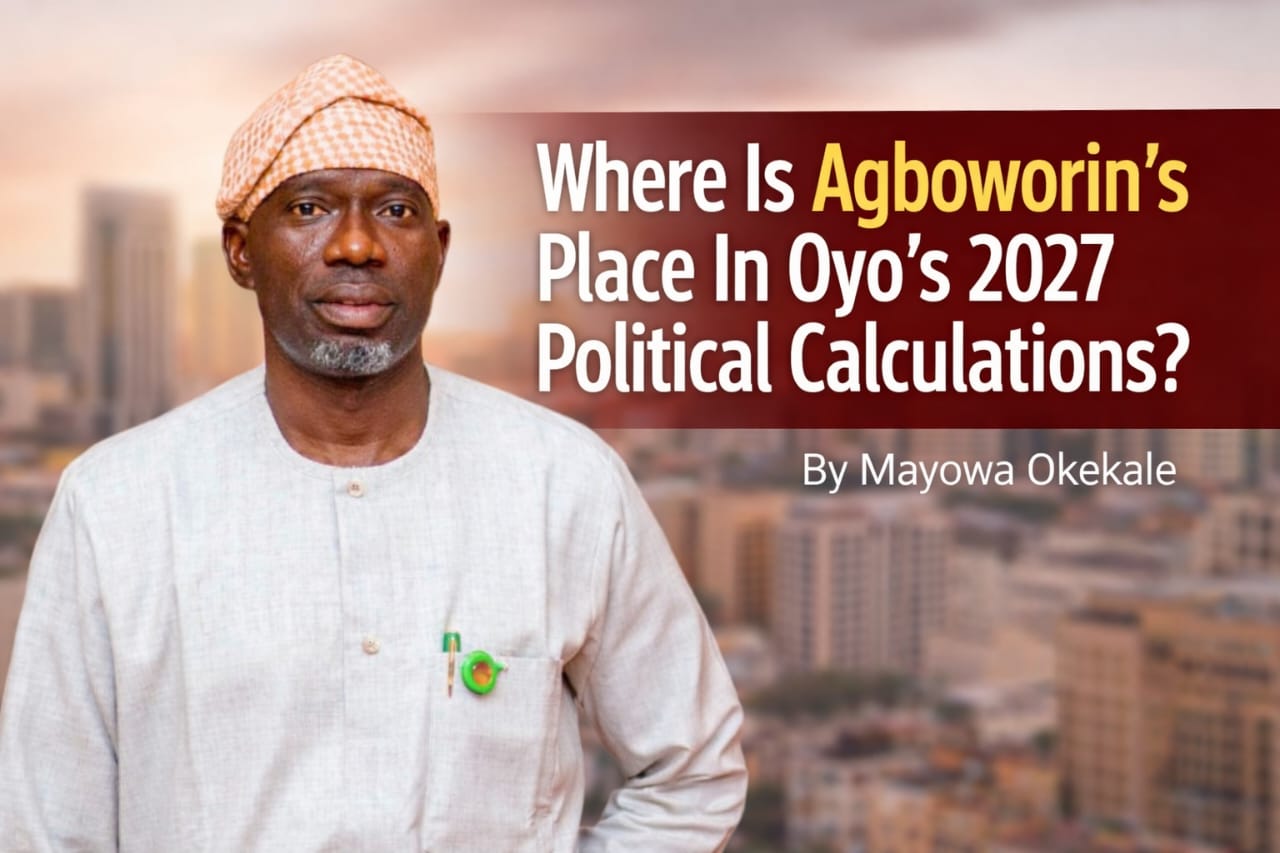
Yet, one of the notable political figures in the state, who has remained relatively quiet in the unfolding calculations is Abass Adigun (Agboworin), the lawmaker representing Ibadan North-East/Ibadan South-East Federal Constituency.


But despite the silence, Agboworin’s political relevance in Oyo politics remains difficult to ignore. Without doubt, Ibadan remains the political heartbeat of Oyo State, and politicians who command influence within the city often play decisive roles in the politics of the state.


Over the years, Agboworin has steadily built a reputation as a grassroots politician with a strong connection to his constituents and the people of Oyo State at large.

Through various empowerment initiatives, humanitarian interventions, infrastructure projects, and constituency engagements, he has developed a network that stretches across communities in Ibadan North-East and Ibadan South-East. These connections have strengthened his political base and made him a recognizable figure in Ibadan’s evolving political structure.


For many observers, this grassroots reach keeps him relevant in any conversation about future political alignments in the state.
Another factor that has continued to define the political trajectory of Abass Adigun Agboworin is his strong working relationship with Seyi Makinde. Rather than positioning himself in ways that could create friction within the political structure, Agboworin has consistently reaffirmed his loyalty to the governor, the leadership of the Peoples Democratic Party in Oyo State, and the broader interests of the people.
His posture has largely been interpreted by political observers as one rooted in party discipline, cooperation, and a shared commitment to sustaining the developmental agenda currently unfolding across the state.
Beyond rhetoric, Agboworin’s contributions have also been reflected in tangible efforts aimed at strengthening security and infrastructure within Oyo State. A notable example is his role in facilitating the establishment of a Nigerian Air Force Base in the state, an intervention widely regarded as a strategic boost to the security architecture of the region.
The presence of the Air Force facility is expected to enhance surveillance capacity, improve rapid response to security threats, and reinforce the broader efforts of the state government to safeguard lives and property. For many residents and political stakeholders, the project stands as a practical demonstration of Agboworin’s ability to leverage his position at the federal level to attract critical security infrastructure that benefits Oyo State.
Talking more about the political trajectory of Abass Adigun Agboworin ahead of the 2027 electoral cycle in Oyo State, much of the conversation has centered on his steady rise, party loyalty, and deep grassroots connections. Yet beyond the calculations of power and alliances, one factor that continues to strengthen his political relevance is the growing recognition of his practical interventions in critical social sectors including education, security, and healthcare— within his constituency.
Agboworin’s approach to representation has increasingly reflected a model that blends legislative duties with targeted social investments aimed at improving everyday life for ordinary citizens. His initiatives in the education sector, for instance, have drawn considerable attention across communities in Ibadan, where he represents the people of Ibadan North-East and Ibadan South-East Federal Constituency in the House of Representatives (Nigeria). For many students, particularly those from low-income households who cannot afford private tutoring, the after-school lessons represent an opportunity that might otherwise be out of reach.
Agboworin has also extended his constituency interventions into the healthcare sector through the introduction of a mobile clinic initiative. He is the only lawmaker in Oyo State whose mobile health service is designed to bring basic medical care directly to communities, especially areas where access to healthcare facilities remains limited. The mobile clinic periodically moves across communities within the constituency, providing services such as conducting basic tests, basic diagnosis, and distribution of essential medications.
For many residents—particularly elderly citizens and low-income families—the initiative has helped reduce the financial and logistical barriers that often prevent timely access to healthcare.
These interventions have helped shape Agboworin’s public image not just as a legislator focused on parliamentary duties, but as a representative increasingly associated with grassroots-driven social impact. Within the broader political conversations leading toward 2027 in Oyo State, such initiatives contribute to a reputation built around tangible constituency engagement.
Political watchers note that this alignment has helped maintain internal stability within the party structure in Ibadan, particularly at a time when early permutations for 2027 are already creating rivalries in some quarters
Perhaps the most distinctive aspect of Agboworin’s political posture is his consistent message regarding personal ambition. On several occasions, the federal lawmaker has stated that his political future remains in the hands of Governor Makinde.
According to him, whatever role the governor believes he should play in the future is what he will accept. This approach sharply contrasts with the strategy of many politicians who have already begun aggressively promoting their ambitions ahead of 2027.
While others are gradually projecting their faces and testing the waters for higher offices, Agboworin appears to have chosen a more restrained path—focusing on his current assignment in Abuja — representing his people and facilitating meaningful projects to not only his constituency but Oyo State as a whole. Obviously, he has left future decisions to party leadership and his Principal, His Excellency, Governor Makinde.
Let me quickly add that in politics, silence does not necessarily mean absence. For many analysts, Agboworin’s measured approach may reflect a strategic calculation rather than a lack of ambition.
With his grassroots structure in Ibadan, his alignment with the state leadership, and his growing experience in national politics, his name continues to surface whenever discussions about the future political direction of Oyo State arise.
In addition, some observers note that in a religiously diverse state like Oyo, his identity as a Muslim could become one of several subtle factors parties may consider when weighing the delicate balance of representation in selecting a future governorship candidate, even as merit, political structure, and public acceptance remain the dominant considerations.
In conclusion, as the countdown to 2027 gradually intensifies, the question may not simply be whether Agboworin has political ambitions—but rather what role the political leadership in Oyo State ultimately asks him to play.


