







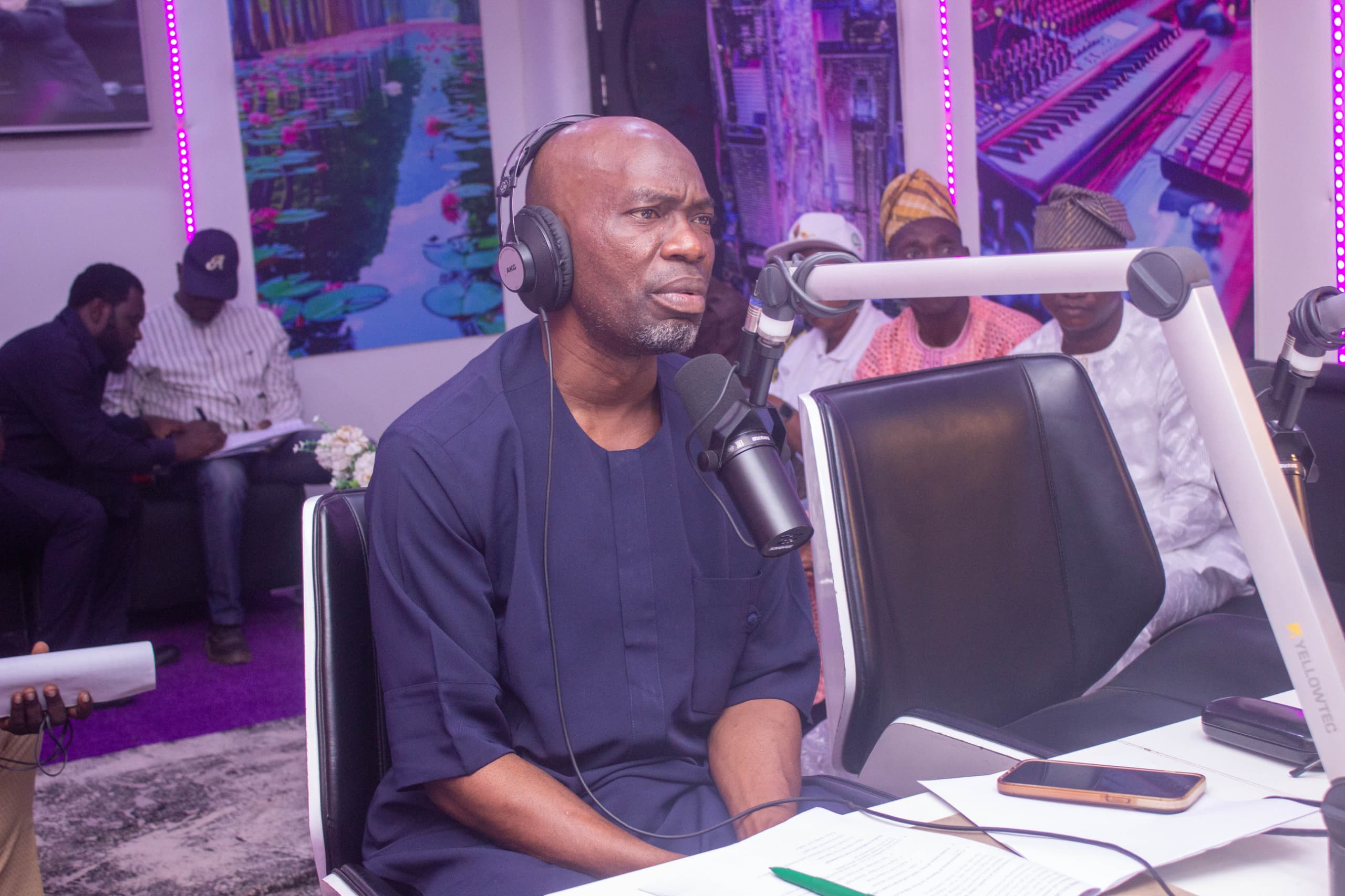


A member of the House of Representatives representing Ibadan South-East/North-East Federal Constituency, Rep. Abass Adigun (Agboworin), has blamed the Federal Government for what he described as its failure to accord insecurity the level of priority it deserves, following the recent United States airstrike in Sokoto State.
Agboworin made the remarks during a recent interview on Fresh 105.9FM, where he reacted to reports of the US military strike, describing the development as disappointing and indicative of unseriousness on the part of the leadership in tackling security challenge of the country.


According to him, Nigeria’s inability to tackle insecurity has created a situation where external forces could step in to fill the gap.



He recalled that successive Nigerian administrations had, in the past, resisted attempts by the United States to gain security access into the country.


“From the time of President Olusegun Obasanjo through Goodluck Jonathan and even under President Muhammadu Buhari, such approaches were rejected,” Agboworin said.

He expressed concern that recent developments might now be creating an opening for foreign involvement, raising questions about Nigeria’s sovereignty and internal security capacity.
Speaking further, the lawmaker attributed the worsening security situation to what he termed a lack of strong political will by those in leadership positions.
“If you cannot solve your problems, someone else will do it for you. That is the reality,” he said, stressing that “insecurity thrives not because Nigeria lacks resources, but because of ineffective deployment of those resources.”
The two term lawmaker, drawing from his experience in the 9th National Assembly as a member of the House Committee on Security, noted that billions of naira are appropriated annually to security agencies, yet the impact on the ground remains minimal.
The lawmaker disclosed that he had previously proposed a comprehensive security model as an alternative to state police, which he said was ignored.
His proposal involved the recruitment of 1,000 security personnel from each of the 774 local government areas across the country, to be trained by the military in combat operations, similar to the National Guard system in the United States.
He noted further that after their training, they should be returned to secure their different local government areas, which will remain their jurisdiction.
Under the plan, the personnel—comprising both men and women between the ages of 20 and 35—would operate within their local governments, enabling effective grassroots intelligence gathering,
Retired senior military officers would oversee the structure under a supervisory committee domiciled at the Presidency, while salaries and allowances would be paid directly by the Federal Government to prevent corruption.
Agboworin said the initiative would not only strengthen internal security but also address youth unemployment to contribute to national stability.
He expressed regret that the proposal failed to gain acceptance, blaming resistance from certain interests and institutions.
Nevertheless, he maintained that Nigeria has capable and courageous security personnel who can overcome the insecurity challenge if properly empowered and coordinated.
“The capacity is there. What is missing is the political will. If we get it right, insecurity can be drastically reduced within one month.”


